Well, after an unplanned leave of absence called life, I'm back in the saddle for another Cannonball Read. Yes, I haven't performed so hotly in these contests, however I still enjoy participating. Not only does this promote literacy and make reading look fun (and sexy, if you've seen the unofficial mascot on this year's sign up page and have proclivities towards one Michael Fassbender); it also helps us Pajibans remember and honor our dear friend Ms. Alabama Pink, who was taken from her family and friends all too soon by the scourge of Cancer.
So, with her noble, warrior queen spirit in memory; and a shit load of literature planned out ahead of us; it's on. My unofficial mascot this year is none other than everyone's favorite cop from New York, John McClane; and this year's unofficial title is "Read Free or Cannonball Hard". With everything in place, and at least three reviews coming in the next couple of days, time to start things off with an old rallying cry...
Friday, March 9, 2012
Saturday, August 6, 2011
The Cannonball Read III - Osaka Slide: #11 - Carte Blanche by Jeffery Deaver
Full Disclosure: I've been lax with my disclaimers. I really should be including these with my posts on books I received for free. Not only is it legally expected, it's also just good form. I'd like to thank Heidi Metcalfe at Harper Collins for providing me with a copy of Men, Women, and Children; as well as Alicia Samuel at Simon and Schuster for providing me with the review copy of this very book under review.
Blame my father for making me a James Bond fan. He owned all the movies, and ever since he was a kid he'd been a big fan. If it wasn't for him owning the movies, I'd have thought that 007 was a rather neat video game character, instead of a cinematic icon of suavity and danger. And if it wasn't for the films, I'd have never taken enough interest to start collecting and reading the Bond books over the years, which would have meant I'd missed out on being introduced to Ian Fleming's sterling prose. Which would mean that I wouldn't be able to tell the difference between the quality of this book versus the previous attempt at resurrecting Bond, Devil May Care, as compared to the Fleming texts.
Devil May Care was a disaster. A formulaic fill in the numbers "tribute" to Ian Fleming's writing, that failed to capture me the way Fleming himself did upon the first read. Truthfully, the only reason I own the book is for completion sake. When I heard Carte Blanche was coming up, I seized the opportunity because I figured that if it was good, my faith would be restored. (And if it was bad, then I'd have a good time writing a negatively scathing review.) I am happy to announce that Carte Blanche succeeds in rebooting the franchise, and giving us readers something to look forward to. James Bond truly is back.
Bond, now a veteran of the war in Afghanistan, is a young 00 agent at the Overseas Development Group (ODG for short), a front for an organization loosely connected to MI6. If Six needs something done, but has its hands tied with the regulations, the ODG's O-Section goes to work with their carte blanche privileges. So long as it's overseas, it's theirs to do whatever they need to in order to get the job done. It is with this directive that our favorite agent of mystery and intrigue hops the globe in order to avert a disaster only known as Incident Twenty. It's set to happen in five days time, and James Bond will not only have to outsmart the enemy, but also bureaucratic hurdles within his own government, to stop the man who's at the head of it all...recycling magnate Severin Hydt.
This is the first Deaver book I've read and honestly after reading what he did with Bond, I ran out and picked up a copy of his other recent release, Edge. He knows his British slang enough to be convincing, he knows the economy of story masterfully enough to keep the book moving at a thrilling pace, and he knows the Bond formula enough to stay true when he has to and to innovate when the audience wants to. Literally, reading the last chapter of the book there was a moment I was afraid he'd sink into a typical Bond moment...and he didn't. He is obviously a fan of the new, gritty Bond reboot films...which also means he is a true Ian Fleming fan. What's even more impressive is that for an initial installment of a series reboot, Deaver forgoes the typical style of front-loading set-up and short changing actual action. As far as events are concerned, this reads more like an entry that confidentially trusts its audience knows the world enough that it doesn't have to hold their hand and introduce them to everyone. It lets them work the room and make its own introductions. It's a Bond book written by a Bond author.
Blame my father for making me a James Bond fan. He owned all the movies, and ever since he was a kid he'd been a big fan. If it wasn't for him owning the movies, I'd have thought that 007 was a rather neat video game character, instead of a cinematic icon of suavity and danger. And if it wasn't for the films, I'd have never taken enough interest to start collecting and reading the Bond books over the years, which would have meant I'd missed out on being introduced to Ian Fleming's sterling prose. Which would mean that I wouldn't be able to tell the difference between the quality of this book versus the previous attempt at resurrecting Bond, Devil May Care, as compared to the Fleming texts.
Devil May Care was a disaster. A formulaic fill in the numbers "tribute" to Ian Fleming's writing, that failed to capture me the way Fleming himself did upon the first read. Truthfully, the only reason I own the book is for completion sake. When I heard Carte Blanche was coming up, I seized the opportunity because I figured that if it was good, my faith would be restored. (And if it was bad, then I'd have a good time writing a negatively scathing review.) I am happy to announce that Carte Blanche succeeds in rebooting the franchise, and giving us readers something to look forward to. James Bond truly is back.
Bond, now a veteran of the war in Afghanistan, is a young 00 agent at the Overseas Development Group (ODG for short), a front for an organization loosely connected to MI6. If Six needs something done, but has its hands tied with the regulations, the ODG's O-Section goes to work with their carte blanche privileges. So long as it's overseas, it's theirs to do whatever they need to in order to get the job done. It is with this directive that our favorite agent of mystery and intrigue hops the globe in order to avert a disaster only known as Incident Twenty. It's set to happen in five days time, and James Bond will not only have to outsmart the enemy, but also bureaucratic hurdles within his own government, to stop the man who's at the head of it all...recycling magnate Severin Hydt.
This is the first Deaver book I've read and honestly after reading what he did with Bond, I ran out and picked up a copy of his other recent release, Edge. He knows his British slang enough to be convincing, he knows the economy of story masterfully enough to keep the book moving at a thrilling pace, and he knows the Bond formula enough to stay true when he has to and to innovate when the audience wants to. Literally, reading the last chapter of the book there was a moment I was afraid he'd sink into a typical Bond moment...and he didn't. He is obviously a fan of the new, gritty Bond reboot films...which also means he is a true Ian Fleming fan. What's even more impressive is that for an initial installment of a series reboot, Deaver forgoes the typical style of front-loading set-up and short changing actual action. As far as events are concerned, this reads more like an entry that confidentially trusts its audience knows the world enough that it doesn't have to hold their hand and introduce them to everyone. It lets them work the room and make its own introductions. It's a Bond book written by a Bond author.
It's rare that I gush over a book this much. Usually it's in the middle, with a couple quibbles here and there. Frankly, I can't think of any quibbles with this book at the moment. I think it's because the Bond formula is so comfortable that it's ok to follow it. However, in order for it to truly work, you need to put your own spin on it. Deaver does just that, and he does it admirably. If there's justice in the world of Spies, Simon and Schuster will continue to produce Bond novels with Deaver at the helm. Here's hoping that as always...
James Bond Will Return
Up Next: The Magician King by Lev Grossman
Tuesday, June 7, 2011
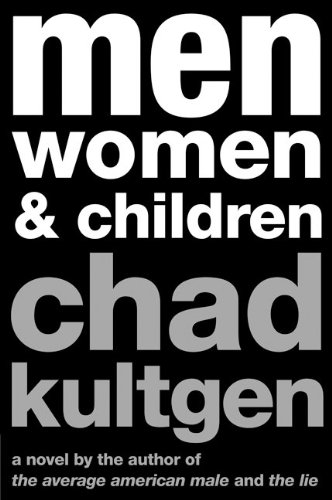
The Cannonball Read III - Osaka Slide: #10 - Men, Women, and Children by Chad Kultgen
Through the course of a school Football season we are told the stories of five families: the Mooneys, the Trubys, the Beltmeyers, the Clints, and the Vances. Each family has their own story and their own issues to deal with. The Mooneys are a Father and Son who are (in their own ways) dealing with the divorce/departure of the Mother in the family. The Trubys have grown sexually stale and ultimately start to think about infidelity. Mrs. Beltmeyer has a tight grip on her daughter Brandy, though not as tightly as she'd like; while Mrs. Clint seems to be the polar opposite of Mrs. Beltmeyer in terms of her daughter's interactions. Finally, the Vances are having that age old debate: to vasectomy or not to vasectomy. Through all of these stories, there is one connecting thread...the theme of sexuality and the Internet. Each family in their own way touches on how computing in the modern age has made us more accessible, while making us drift more apart. People have affairs through websites, children (and sometimes their parents) post provocative pictures of themselves on the Net for all to see, and Sexting is a second language. All modern times for modern problems, and Kultgen doesn't shy away from being able to transition from one story to another, even intermingling some of his threads into each other.
Which brings up the ultimate criticism when evaluating this book: it's about high time for Kultgen to either turn this novel into a franchise, or start with a new canvas and tell an epic story, particularly because this book seems to just end out of nowhere. This is still a good book, but again it ultimately pales in comparison with The Lie: A Novel, particularly because Men, Women & Children: A Novel feels it could go on for another fifty pages and finish out the school year. It most likely does so because the author has built a reputation for not letting any of his characters get out clean. This reputation pretty much leads the reader to automatically assume that by the end of the course of events, there will be blood on everyone's hands. Indeed, the final scene of the book is something akin to a P.T. Anderson film. It ends abruptly, and with a shock; which ultimately makes for a finished product that feels like it's leading to another installment.
Another difference between this book and the author's previous work is that there's actually a pair of characters you want to see make it out with a measure of happiness. The fact that he let them get away with the happiness they did is the only real aspect of this book that kicks the reader in the shin, otherwise everyone pretty much does what his previous protagonists have done. Hearts and minds are broken, sadness prevails over sentimentality, and in the end everyone continues to cope with themselves. Overall, it's par for the course; while at the same time it shows off just how versatile of an author Kultgen really is.
Up Next: Carte Blanche by Jeffrey Deaver
Tuesday, May 3, 2011
The Cannonball Read III - Osaka Slide: #9 - Pygmy by Chuck Palahniuk
Note: This is the second of five reviews in the Author Appreciation series, which is currently showcasing the work of Chuck Palahniuk.
Pygmy is probably one of the most brutal openers a book could ever deliver. Within the first 19 pages we're introduced to our anti-hero character of no name (Pygmy is the handle folks around those parts brand him with) who is part of a sleeper cell of agents assigned with nothing short of the destruction of America. Operation Havoc is their end game, an attack that will throw the nation into its final throes. Millions are to be killed, and the entire culture subverted by any means nessicary. One major problem standing in their way...they're only about 13 years old. The source of the brutality? Our main character (one of those 13 year old spies), who has just violated someone in a way that cannot be described in polite company.
While the dust jacket says it's, "The Manchurian Candidate meets South Park", I'd like to suggest that it's more along the lines of Fight Club meets Pinky and the Brain. (A lot of the humor is derived from Pygmy's broken English observations of our culture and our interactions with each other.) Palahniuk has basically taken Tyler Durden's appetite for social destruction and married it to The Brain's constant mindset of, "God, what are these idiots around me doing? I better play along, lest my true intentions be known". It is with that combination in play that our protagonist leads us on an operation that evokes the memory of a not too dissimilar "Project Mayhem", except with fewer soliders and no bitch tits.
As a matter of fact,
one could easily think of Pygmy
as the illegitimate sequel to Fight Club, something that the book can both trumpet and be less than proud of. Even with its younger characters, alternate setting, and even the presense of a detailed backstory for our comrade of glorious revolution; it still manages to sometimes come off as Jack's Smirking Revenge part II. One could even argue that Palahniuk has this obsession with tearing the walls of Humanity apart commercial by commercial, and leaving it to fend for itself in a barren wasteland where once was a proud people. But that's only if you let yourself get caught up in the trap of comparison. Similarities aside, this is still a work that's relevant to our modern times. Even more so now as we wrestle with the logic of just what makes a terrorist, what makes a Freedom Fighter, and when we should celebrate or mourn their death. (Be it literal or symbolic.) Rest assured, this is an entertaining read where you will laugh, you will be offended, and you will sympathize with the enemy.
Pygmy is probably one of the most brutal openers a book could ever deliver. Within the first 19 pages we're introduced to our anti-hero character of no name (Pygmy is the handle folks around those parts brand him with) who is part of a sleeper cell of agents assigned with nothing short of the destruction of America. Operation Havoc is their end game, an attack that will throw the nation into its final throes. Millions are to be killed, and the entire culture subverted by any means nessicary. One major problem standing in their way...they're only about 13 years old. The source of the brutality? Our main character (one of those 13 year old spies), who has just violated someone in a way that cannot be described in polite company.
While the dust jacket says it's, "The Manchurian Candidate meets South Park", I'd like to suggest that it's more along the lines of Fight Club meets Pinky and the Brain. (A lot of the humor is derived from Pygmy's broken English observations of our culture and our interactions with each other.) Palahniuk has basically taken Tyler Durden's appetite for social destruction and married it to The Brain's constant mindset of, "God, what are these idiots around me doing? I better play along, lest my true intentions be known". It is with that combination in play that our protagonist leads us on an operation that evokes the memory of a not too dissimilar "Project Mayhem", except with fewer soliders and no bitch tits.
As a matter of fact,
Up Next: Book Two in the Palahniuk Appreciation Series, Haunted
Labels:
Chuck Palahniuk,
Doubleday,
Pygmy,
Random House,
The Cannonball Read III
Monday, April 25, 2011
The Cannonball Read III - Osaka Slide: #8 - Snuff by Chuck Palahniuk
Note: This is the first of five reviews in the Author Appreciation series, which is currently showcasing the work of Chuck Palahniuk.
It's so good to be reading Palahniuk again. Honestly, the man's one of the best authors of his time and he continues to be consistently entertaining, whether he blows your mind or doesn't. That's not saying that his non-mind blowing works are less inferior, it's just that Chuck focuses on one of two things: the characters or the plot. Snuff is one of those books where he focuses
more on the characters, and in his doing so he makes the actual plotting seem more interesting than it would under more traditional story telling methods.
It's so good to be reading Palahniuk again. Honestly, the man's one of the best authors of his time and he continues to be consistently entertaining, whether he blows your mind or doesn't. That's not saying that his non-mind blowing works are less inferior, it's just that Chuck focuses on one of two things: the characters or the plot. Snuff is one of those books where he focusesCassie Wright wants to die...or at least that's what it seems like when she agrees to film a 600 man gang bang in a bid to secure her position in the annals of Porn Star history. What began with a casting call lead to a room of 600 guys standing around: primping, preening, preparing, and waiting for their shot with Ms. Wright. Throughout the day's events we're privy to four perspectives:
- Mr. 600, aka Branch Bacardi: One of Cassie's former co-stars, also looking for a boost.
- Mr. 137, aka Dan Banyan: A washed out TV star who wants to jump start his career after some sordid rumors.
- Mr. 72: a kid wants to save his mother...who's performing in the room upstairs from him.
- Sheila: the talent wrangler who put this whole show together.
Each individual contributes a rather interesting piece to the overall plot of the book, which isn't all that complex, really. Where the complexity, and the beauty of the story, comes in is with the characters. We see Mr. 600 reminisce about the old days and how he deals with aging. Mr. 72's coming to terms with some rather messed up family issues, and ultimately try to resolve the impotence caused by them. Mr. 137 talks about how fame's fickle finger found him, and how it threatens to leave him due to his life choices to chase it. And Sheila...well Sheila's the only person who knows what's really going on, and she's playing it close to the clipboard. Through these four people, we get to know Cassie Wright. Her life, her times, and her ultimate place in history.
Palahniuk knows how to write for multiple voices just as well as he does with his stories that deal with a singular protagonist. Instead of one person's emotional baggage, we get that of four people. Four people who constantly interlock and collide as they vie for their own personal moment of fame, which will contribute to Ms. Wright's very own fame itself. The author explores the themes of fame and aging, as well as just how screwed up your family can make you, in parallel tracks that run at the same time, but ultimately collide in the end. The wisdom of our parents influences us to do the things we do in life, and not only does Chuck see this, but he exploits it for all of its darkly comedic and dramatic worth. If anything, this feels like Palahniuk's most sentimental work since I read Choke, the only difference being it eases up on the darkly comedic and veers a little more towards the dramatic. It's not a mind blower, but Snuff is still an entertaining examination on the twisted condition that is fame, and just what it does to us (and those around us) in the long run.
Up Next: Book Two in the Palahniuk Appreciation Series, Pygmy
Labels:
Anchor,
Chuck Palahniuk,
Random House,
Snuff,
The Cannonball Read III
Wednesday, April 20, 2011
Coming Soon: The Epic Summer of 2011!
Ah Summer, the time of surf, skirts, sand, and sweltering heat. It's also the time of the year that everyone is most relaxed and at the same time most energetic.
What better way to commemorate the Summer than to have another special reading project! From June 1st until August 31st, it's going to be nothing but epics here at TBK. For the sake of tracking, here's my definition of an epic:
"A huge story, sprawling wide expanses of distance, time, and/or cast, that is AT LEAST 700 pages."
That in mind, throughout those three months I will be reading nothing but epics. (Except for a couple of possible comic breaks and the latest Chad Kultgen and Lev Grossman releases. Have to stay timely somehow.) There isn't a definitive schedule in the works, but the three tentpoles that are going to hold this marathon up are:
Gone With the Wind
Other than that I've been considering others such as The Stand, A Game of Thrones, Under The Dome, and Drood. (However, suggestions are welcome for entries in this epic undertaking.) Epic Summer becomes Epic on June 1st.
Wednesday, April 13, 2011
The Cannonball Read III - Osaka Slide: #7 - The Secret Year by Jennifer R. Hubbard
This isn't Kings of Colorado, I know. After overloading myself with Jersey Shore literature, I could hardly settle myself into a story of redemption through horses and hard time. So I moved onto JWoww's book, in hopes that I may slay that beast and be done with the Jersey Shore kids for good. That didn't happen either. I couldn't even get through James Franco's short story collection, due to the fatigue I had put myself through. After the sprint I'd done for the beginning of this quest, I needed something simple. Something light that would alleviate me of the weight that I had taken on. In the words of a good friend of mine, I needed something borderline trashy. What I went with was The Secret Year
: a book that's not so much trashy as it is steamy, and even then it is mildly so.
Undoubtedly there is sex in the book, but it's not so smutty that you need to take a shower after reading it. Our narrator throughout the story is Colten "Colt" Morrissey, a teenage boy who confides to the audience about his secret year long relationship with Julia Vernon. It's not that Colt and Julia don't like each other, it's just that Colt comes from the poor side of town and Julia is from the rich side. Now before you say, "Hey, I've read this book before", the book's description itself even sells the book as follows:
"Take Romeo and Juliet. Add The Outsiders. Mix thoroughly."
It's the perfect summary for the story that unfolds as Colt recalls the events that occurred after Julia's death in a drunk driving accident. Shortly after her funeral, he receives her secret diary, consisting of letters all written out to him. These letters give Colt insight into what Julia was thinking about during the span of their relationship, as well as how she really felt about him. What he sees is a portrait of a girl uncertain as to whether she should stay with the boy she truly loves, or continue to date her boyfriend. As Colt reads on into Julia's thoughts, personal developments end up spurring sociological developments, culminating in a big "rumble" towards the end of the book.
Which is precisely why I can say I like the book, but I don't love it. For starters, The Secret Year really sells itself on the love story aspect, when it really comes off as a more uneven blend of Hintonesque social tension and romantic entanglements. That's not to say that the book isn't an enjoyable read, but it's not exactly the most consistent in tone and story. Also, the book moves so fast that by the end of the novel, I was expecting at least another 10 to 20 pages wrapping things up. Instead, the book just kind of ends, which is fine if you're trying to use that as a metaphor for the fleeting nature of Julia's life. By the end of the book, it's as if we truly are in Colten's shoes: we've hit the end of the text, we want to know more about what we've just finished reading, and we're surprised it ended so abruptly.
The Secret Year starts with a forbidden love, but ends with a rumble, and somehow two plot lines feel like they should have been separated into their own books in order to truly flourish. It would be nice if Ms. Hubbard could revisit this world, because while it isn't the most polished product (it is a debut novel, after all), it has enough flashes of depth that it would be fun to see her further hone her craft and deliver more tails of The Black Mountain kids and The Flats kids. If anything, I would like to see her give a little more resolution to poor Colt, because the kid deserves it.

Undoubtedly there is sex in the book, but it's not so smutty that you need to take a shower after reading it. Our narrator throughout the story is Colten "Colt" Morrissey, a teenage boy who confides to the audience about his secret year long relationship with Julia Vernon. It's not that Colt and Julia don't like each other, it's just that Colt comes from the poor side of town and Julia is from the rich side. Now before you say, "Hey, I've read this book before", the book's description itself even sells the book as follows:
"Take Romeo and Juliet. Add The Outsiders. Mix thoroughly."
It's the perfect summary for the story that unfolds as Colt recalls the events that occurred after Julia's death in a drunk driving accident. Shortly after her funeral, he receives her secret diary, consisting of letters all written out to him. These letters give Colt insight into what Julia was thinking about during the span of their relationship, as well as how she really felt about him. What he sees is a portrait of a girl uncertain as to whether she should stay with the boy she truly loves, or continue to date her boyfriend. As Colt reads on into Julia's thoughts, personal developments end up spurring sociological developments, culminating in a big "rumble" towards the end of the book.
Which is precisely why I can say I like the book, but I don't love it. For starters, The Secret Year really sells itself on the love story aspect, when it really comes off as a more uneven blend of Hintonesque social tension and romantic entanglements. That's not to say that the book isn't an enjoyable read, but it's not exactly the most consistent in tone and story. Also, the book moves so fast that by the end of the novel, I was expecting at least another 10 to 20 pages wrapping things up. Instead, the book just kind of ends, which is fine if you're trying to use that as a metaphor for the fleeting nature of Julia's life. By the end of the book, it's as if we truly are in Colten's shoes: we've hit the end of the text, we want to know more about what we've just finished reading, and we're surprised it ended so abruptly.
The Secret Year starts with a forbidden love, but ends with a rumble, and somehow two plot lines feel like they should have been separated into their own books in order to truly flourish. It would be nice if Ms. Hubbard could revisit this world, because while it isn't the most polished product (it is a debut novel, after all), it has enough flashes of depth that it would be fun to see her further hone her craft and deliver more tails of The Black Mountain kids and The Flats kids. If anything, I would like to see her give a little more resolution to poor Colt, because the kid deserves it.
Up Next: Author Appreciation Marathon #1- Chuck Palahniuk. In no particular order...
- Snuff
- Pygmy
- Lullaby
Subscribe to:
Posts (Atom)